I used to obsess over my scale weight. I'd celebrate if the number dropped, even if I looked and felt weaker. I'd panic if it went up, even when my clothes fit better.
Then I learned something that changed everything: the scale can't tell the difference between muscle and fat. Two people can be the exact same height and weight, but look completely different because of their body composition.
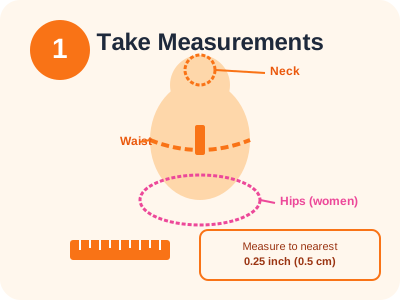
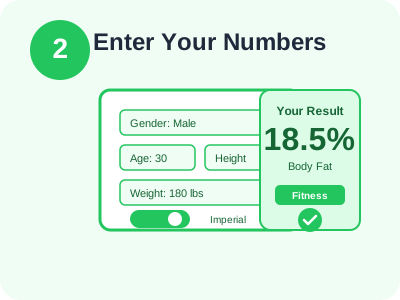
That's why I built this calculator. It uses the U.S. Navy Method—a formula developed by military researchers to quickly and accurately estimate body fat percentage using simple measurements. It's not perfect (nothing is except expensive lab tests), but it's way more useful than BMI or scale weight for tracking your actual progress.
Why Body Fat Percentage Beats BMI Every Time
BMI (Body Mass Index) is just your weight divided by your height squared. That's it. It doesn't know if you're an NFL linebacker or a couch potato. If you're 6'0" and 220 lbs, you're "overweight" according to BMI—whether that 220 lbs is muscle or fat.
Body fat percentage, on the other hand, tells you what you're actually made of. Are you 20% body fat (athletic and lean) or 30% body fat (carrying extra fat)? That distinction matters way more than your total weight.
The "Skinny Fat" Problem
I've seen people with "normal" BMIs who have dangerously high body fat levels and low muscle mass. This is called "skinny fat" or normal weight obesity, and it carries the same health risks as being visibly overweight. BMI completely misses this, but body fat percentage catches it every time.
Understanding Your Body Fat Results
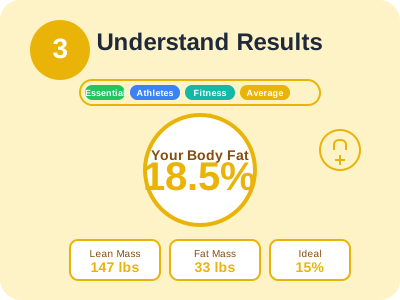
When you get your results, you'll see a percentage and a category. Let me break down what those categories actually mean for your health and appearance.
Body Fat Percentage Categories (Men)
Essential Fat
Minimum required for survival. Dangerous to maintain long-term.
Athletes
Elite athletic level. Visible abs, vascular, very lean.
Fitness
Good, athletic level. Some muscle definition visible.
Average
Average healthy range. May have some softness around waist.
Obese
Increased health risks. Time to make changes.
Body Fat Percentage Categories (Women)
Essential Fat
Minimum required for survival. Hormonal issues likely.
Athletes
Elite athletic level. Very lean, defined muscles.
Fitness
Fit and healthy. Attractive, athletic appearance.
Average
Average healthy range. Most women fall here.
Obese
Increased health risks. Time to make changes.
Essential Fat
This is the fat your body needs to survive. It's stored in your bone marrow, organs, and nervous system. Men need at least 2-5%, women need 10-13%. Going below essential fat is dangerous and can cause hormonal problems, organ failure, and even death.
Storage Fat
This is the extra fat your body stores for energy. It includes subcutaneous fat (under your skin) and visceral fat (around your organs). Some storage fat is healthy and necessary, but too much—especially visceral fat—causes health problems.
How We Measure Body Fat: Methods Compared
This calculator uses the U.S. Navy Method, but there are lots of ways to measure body fat. Here's how they stack up in terms of accuracy, cost, and convenience.
U.S. Navy Method (This Calculator)
✓ Free, fast, no equipment needed, decent accuracy for most people
✗ Less accurate for very muscular individuals or those with unusual body proportions
DEXA Scan (Dual-Energy X-ray Absorptiometry)
✓ Gold standard, measures bone density too, shows fat distribution
✗ Expensive, requires medical facility, radiation exposure (minimal)
Hydrostatic Weighing (Underwater Weighing)
✓ Very accurate, based on body density
✗ Requires specialized facility, uncomfortable (underwater), not widely available
Skinfold Calipers
✓ Inexpensive, can track changes over time
✗ Highly dependent on technician skill, awkward to measure yourself
Bioelectrical Impedance (Body Fat Scales)
✓ Convenient, can use at home, quick
✗ Affected by hydration, food intake, time of day—can be wildly inaccurate
Bod Pod (Air Displacement)
✓ Very accurate, non-invasive, quick
✗ Expensive, limited availability
The Real Health Implications of Body Fat
I'm not here to fearmonger, but you should understand what the research actually says about body fat and health. Not all body fat is created equal, and location matters.
Dangers of Excess Body Fat
- •Type 2 Diabetes - Excess fat, especially visceral fat, causes insulin resistance
- •Heart Disease - Higher risk of heart attack, stroke, and high blood pressure
- •Certain Cancers - Linked to breast, colon, kidney, liver, and pancreatic cancers
- •Sleep Apnea - Excess tissue around airways causes breathing problems during sleep
- •Joint Problems - Extra weight puts stress on knees, hips, and lower back
- •Visceral Fat - The dangerous fat around your organs that inflames everything
- •Fatty Liver Disease - Fat buildup in the liver can lead to cirrhosis
- •Hormonal Imbalances - Excess fat disrupts testosterone, estrogen, and growth hormone
- •Mental Health - Higher rates of depression, anxiety, and low self-esteem
- •Reduced Life Expectancy - Obesity shortens lifespan by 6-14 years on average
Dangers of Too Little Body Fat
•Hormonal Shutdown - Women can lose their period (amenorrhea); men's testosterone crashes
•Weak Immune System - Your body can't fight infections effectively
•Bone Loss - Increased risk of osteoporosis and stress fractures
•Muscle Wasting - Body breaks down muscle for energy when fat is too low
•Organ Damage - Heart, liver, and kidneys can fail without essential fat padding
Bottom line: There's a healthy range. Being too lean is just as dangerous as being too fat. Aim for the "Athletes" or "Fitness" category, not "Essential Fat."
How to Lower Body Fat Safely (What Actually Works)
I've seen thousands of people try to lose body fat. Most fail because they overcomplicate it. Here's what actually works, based on both research and real-world results.
1. Calorie Deficit is Non-Negotiable
You can't out-train a bad diet. To lose fat, you need to eat fewer calories than you burn. Aim for a moderate deficit of 300-500 calories below your maintenance level. This translates to about 0.5-1 lb of fat loss per week. Anything faster and you're likely losing muscle.
2. Prioritize Protein (Every Single Meal)
I aim for 0.8-1g of protein per pound of goal body weight. If you want to weigh 170 lbs, eat 170g of protein daily. Protein preserves muscle while dieting, keeps you full, and has a high thermic effect (your body burns more calories digesting it). It's the secret weapon of fat loss.
3. Lift Heavy Things (Seriously)
Cardio burns calories while you're doing it. Strength training builds muscle that burns calories 24/7. Lift weights 3-5 times per week, focusing on compound movements (squat, deadlift, bench, rows, overhead press). You want to lose fat, not muscle.
4. Use Cardio as a Tool, Not a Crutch
Cardio helps, but don't overdo it. 2-3 sessions per week of 20-30 minutes is plenty. Walking 8,000-10,000 steps daily is actually more effective for fat loss than pounding away on a treadmill for hours. Low-intensity activity throughout the day beats one intense gym session.
5. Track Progress, Not Just Weight
The scale lies. Take measurements, photos, and use this calculator weekly. If your weight stays the same but your waist shrinks, you're gaining muscle and losing fat—that's a win. I've seen people get discouraged when they're actually making amazing progress because they only watched the scale.
Mind-Blowing Fact: You Breathe Out Fat
Here's something most people get wrong: when you lose fat, it doesn't magically convert to energy or heat. Fat primarily leaves your body through your lungs as carbon dioxide. I know—it sounds crazy, but let me explain the science.
The Chemistry of Fat Loss
When you burn fat, your body breaks down triglycerides into carbon dioxide and water. The chemical formula is C₅₅H₁₀₄O₆. During oxidation, this produces 84 CO₂ molecules (exhaled) and 52 H₂O molecules (excreted through urine, sweat, breath). 84% of fat leaves via your lungs as CO₂.
Why Breathing Matters
This is why cardio and exercise help fat loss—you breathe more, exhaling more CO₂. But don't think hyperventilating will burn fat—you still need the calorie deficit to trigger fat oxidation. Breathing just removes the byproducts. This research comes from a BMJ study that surprised even the researchers.
Bottom line: Fat isn't "converted" to muscle or energy. It's broken down into carbon dioxide and water, and you literally breathe it out. The rest leaves through urine, sweat, and other bodily fluids. So yes, in a way, you're exhaling your excess weight.
U.S. Navy Body Fat Standards by Age
The U.S. Navy has specific maximum body fat percentages based on age. These standards are used to determine eligibility for service. Even if you're not joining the military, these are useful reference points for what's considered acceptable.
Male Standards (Maximum %)
| Age Range | Max Body Fat % |
|---|---|
| 17-20 years | 22% |
| 21-27 years | 23% |
| 28-39 years | 24% |
| 40+ years | 26% |
Female Standards (Maximum %)
| Age Range | Max Body Fat % |
|---|---|
| 17-20 years | 33% |
| 21-27 years | 34% |
| 28-39 years | 35% |
| 40+ years | 36% |
Note: These are maximum allowable percentages. Service members are encouraged to be well below these limits for optimal performance and health.
Average Body Fat Percentages (U.S. Population)
Based on NHANES data (1999-2004), here are the average body fat percentages for Americans. These numbers have likely increased since then due to rising obesity rates. How do you compare?
Men - Average Body Fat %
Women - Average Body Fat %
Reality check: The "average" American has body fat percentages in the overweight to obese range. Being at the healthy end of the spectrum (Fitness category for your gender) puts you well above average in terms of health.
Body Fat FAQs: Everything You Need to Know
I've compiled the most common questions about body fat percentage based on thousands of conversations. If you don't see your question here, I probably answer it in the content above.
Yes, absolutely. BMI only considers height and weight, so it classifies muscular athletes as 'overweight' and misses 'skinny fat' people who look thin but have unhealthy body composition. Body fat percentage tells you what you're actually made of—fat vs muscle vs bone. It's a much more useful metric for tracking health and fitness progress.
For most people, it's about 85-90% accurate compared to DEXA scans (the gold standard). It tends to overestimate body fat in very muscular individuals and underestimate in very lean people. But for the average person, it's remarkably reliable given that it only requires a tape measure and a few basic measurements.
Biology. Women need extra fat for reproductive health—breast tissue, hips, thighs, and a protective layer around reproductive organs. Hormonally, women's bodies are designed to carry more fat to support pregnancy and breastfeeding. This is why women's essential fat range (10-13%) is higher than men's (2-5%).
For men, the fitness range is 14-17% and average is 18-24%. For women, fitness is 21-24% and average is 25-31%. But 'healthy' depends on your goals. Athletes are lower (6-13% men, 14-20% women). Anything above 25% (men) or 32% (women) is considered obese and increases health risks.
Realistic and sustainable fat loss is 0.5-1% of your body weight per week, or about 1-2 lbs total. Faster than that and you're likely losing muscle, not fat. I know crash diets promise 10 lbs in a week, but that's mostly water weight and muscle—and you'll gain it back. Slow and steady wins the fat loss game.
Yes, but it's rare. 'Fat but fit' is a real phenomenon—you can be overweight with excellent metabolic health markers (blood pressure, cholesterol, blood sugar). However, excess weight still increases long-term disease risk. If you're overweight but your health markers are good, focus on maintaining muscle and gradually reducing fat rather than crash dieting.
Not really. Bioelectrical impedance scales are convenient but wildly inaccurate (70-80% accuracy at best). They're affected by hydration, food intake, time of day, and even the temperature in your room. If you use one, use it for trend tracking (same conditions every time) rather than absolute numbers. The U.S. Navy Method is more reliable.
Once every 2-4 weeks is ideal. Body fat changes slowly, and daily measurements will just frustrate you with noise. Measure under the same conditions—same time of day, same hydration level, same measuring technique. Track trends over months, not days.
Subcutaneous fat is the jiggly stuff under your skin. Visceral fat is the dangerous fat deep in your abdomen, wrapped around your organs. You can have a flat stomach but still have dangerous visceral fat. Visceral fat is what drives inflammation and metabolic disease. The waist measurement in this calculator helps estimate visceral fat risk.
No. Spot reduction is a myth. You can't choose where your body loses fat first—genetics determines that. Doing 1,000 crunches won't burn belly fat specifically. You have to lose overall body fat through diet and exercise, and your body will decide where to take it from. Usually, the first place you gain fat is the last place you lose it.
For men, abs start becoming visible around 12-15% body fat. They're really defined at 10-12%. For women, abs become visible around 18-21% and very defined at 16-18%. But everyone's different—some people show abs at higher percentages, others need to be leaner. Genetics play a huge role in fat distribution.
Yes, unfortunately. We naturally lose muscle as we age (sarcopenia) if we don't strength train, which slows our metabolism and causes fat gain. This is why body fat tends to increase with age even if weight stays the same. The antidote? Lifelong strength training and adequate protein intake to preserve muscle.
This blows people's minds: fat primarily leaves your body through your lungs when you exhale. When you burn fat for energy, your body converts triglycerides into carbon dioxide and water. The CO2 is exhaled, and the water leaves through urine, sweat, and breath. So basically, you breathe out fat. Who knew?
When you're in a calorie deficit, your body taps into stored fat for energy. It breaks down triglycerides into glycerol and fatty acids, releases them into your bloodstream, and transports them to muscles that need energy. There, they're oxidized (burned) to produce ATP—your body's fuel. This process happens 24/7 but accelerates during exercise and fasting.
Fat isn't just dead weight—it's essential for survival. Fat stores energy, regulates hormones (insulin, leptin, ghrelin), cushions your organs, insulates your body, and helps absorb vitamins A, D, E, and K. Women need extra fat for reproductive health. The problem isn't having fat—it's having too much of it, especially visceral fat around your organs.
In the United States, average body fat varies by age and gender. For men aged 20-39, the average is about 21-25%. For men 40-59, it's 23-27%. For women aged 20-39, average is 32-36%. For women 40-59, it's 34-38%. These numbers come from NHANES data (1999-2004) and have likely increased since then due to rising obesity rates.
A safe, sustainable rate is 1-3% body fat per month. Faster than that and you're likely losing muscle too. For a 200lb person at 25% body fat (50lb fat), losing 1% means losing 2lb of actual fat. That's a calorie deficit of about 700-1000 calories daily. Patience pays off—slow fat loss stays off, crash dieting comes back.
Your body burns fat whenever it needs more energy than you're providing from food. This happens during fasting (especially overnight), low-intensity cardio, and calorie deficits. High-intensity exercise burns more glycogen (carbs), while lower intensity burns more fat. But total calorie deficit matters more than when you burn it.
There are several methods: (1) U.S. Navy Method (this calculator) using tape measurements—85-90% accurate. (2) DEXA scan—the gold standard at 95-99% accuracy, but expensive. (3) Skinfold calipers—70-85% accurate, requires skill. (4) Hydrostatic weighing—95-97% accurate, but hard to find. (5) Bioelectrical impedance scales—70-80% accurate, very inconsistent.
Absolutely, and it's dangerous. Going below essential fat levels (2-5% men, 10-13% women) causes hormonal shutdown, reproductive issues, immune system weakness, bone loss, and organ damage. Extremely low body fat killed bodybuilder Andreas Münzer—he had no fat reserves to cope with medical stress. Maintain at least essential fat levels.
The U.S. Navy Method (this calculator) is your best bet for home measurement. It's free, relatively accurate (85-90%), and only requires a tape measure. For best results: measure in the morning before eating, use the same locations each time, don't suck in your stomach, and track trends rather than obsessing over single measurements.
Yes, especially with bioelectrical impedance scales (they can be off by 5%+ depending on hydration). The U.S. Navy Method is less affected since it uses physical measurements, but being severely dehydrated can slightly change your circumference measurements. For consistency, measure at the same hydration level each time.
Body fat percentage tells you much more about your health and appearance. Two people can weigh the same but look completely different—one could be 20% body fat (fit) and another 35% (overweight). I recommend tracking both, but if you had to pick one, body fat percentage is the better metric for body composition and health risk.
Muscle is lean mass, so the more muscle you have, the lower your body fat percentage at the same weight. For example, a 200lb person with 160lb lean mass and 40lb fat is 20% body fat. If they build 20lb of muscle and lose 20lb of fat (still 200lb), they're now 180lb lean mass and 20lb fat—only 10% body fat. This is why strength training is crucial for fat loss.
Your actual body fat doesn't change much daily, but measurements can fluctuate due to hydration, food intake, bloating, and even time of day. This is why I recommend measuring only every 2-4 weeks under the same conditions. Daily variations are just noise—look at the trend over months, not days.
The U.S. Navy uses age-based standards. For men: 22% (age 17-20), 23% (21-27), 24% (28-39), 26% (40+). For women: 33% (17-20), 34% (21-27), 35% (28-39), 36% (40+). Other branches have similar standards. These are maximum allowable percentages—you can be below them and still serve.
Knowledge Is Power—Now Use It
You now know your body fat percentage and what it means. But numbers don't change bodies—action does. Use this calculator to track your progress, make adjustments to your diet and training, and be patient with the process.